The method
Five commitments.One standard of integrity.
The voluntary carbon market is heterogeneous. Quality varies by methodology, by developer, by jurisdiction, and by counterparty. TenTrinity Carbon engages only where the underlying programme meets the company's standards on origination, measurement, verification, insurance, and delivery. The five commitments below define those standards.
The position
The voluntary carbon market is bifurcating. Institutional buyers and the standards bodies that inform their procurement decisions are converging on a narrower definition of what counts as a credible credit. Methodologies that rely on estimation by default are losing acceptability. Credits without insurance against permanence and delivery risk are losing acceptability. Credits issued under contested verification are losing acceptability.
TenTrinity Carbon operates on the side of that bifurcation where credits remain defensible.
TenTrinity Carbon's standards are calibrated to where institutional procurement is moving, not to where the market has been. Each of the five commitments below is the company's working answer to a specific question of integrity. Together they describe what counterparties can expect from any credit the company places.
The frontier
Where commitments meet the ground.
Originate
TenTrinity Carbon originates the credits it places, and can show where each one came from.
Joint ventures, not brokerage of unsourced supply.
TenTrinity Carbon engages with project developers and sovereign frameworks at the point of programme origination, not after credits have been issued and passed through intermediate hands. This means the company has direct visibility into the project's design, its methodology selection, its monitoring and reporting architecture, and the contractual arrangements that govern its delivery. The company does not on-sell credits sourced from secondary intermediaries whose own provenance is opaque.
Sovereign alignment is a prerequisite.
Where a project sits in a jurisdiction with a national or sub-national carbon framework, TenTrinity Carbon engages with that framework rather than around it. Letters of authorisation, corresponding adjustment positions under Article 6 of the Paris Agreement, and national registry standing are treated as prerequisites rather than as documentation to be resolved later. A project that cannot secure sovereign alignment is one the company does not originate.
Chain of custody is visible end to end.
From project issuance through any intermediate registry transfer to final delivery to a counterparty, the chain of custody for every credit TenTrinity Carbon places is documented and visible to the counterparty on request. The company does not place credits whose chain of custody includes unaccountable steps.
Measure
Where the science supports direct measurement, TenTrinity Carbon uses it. Where it does not, the company requires a conservative methodology with a published scientific basis.
Direct measurement where applicable.
Several methodology families now permit direct measurement of ecosystem carbon flux, including eddy-covariance flux tower programmes, isotopic tracing approaches, and atmospheric monitoring systems. Where a project sits in a methodology family that admits direct measurement, TenTrinity Carbon prefers projects that adopt it. Direct measurement converts carbon accounting from a modelled estimate into an observed quantity.
Conservative proxies where direct measurement is not feasible.
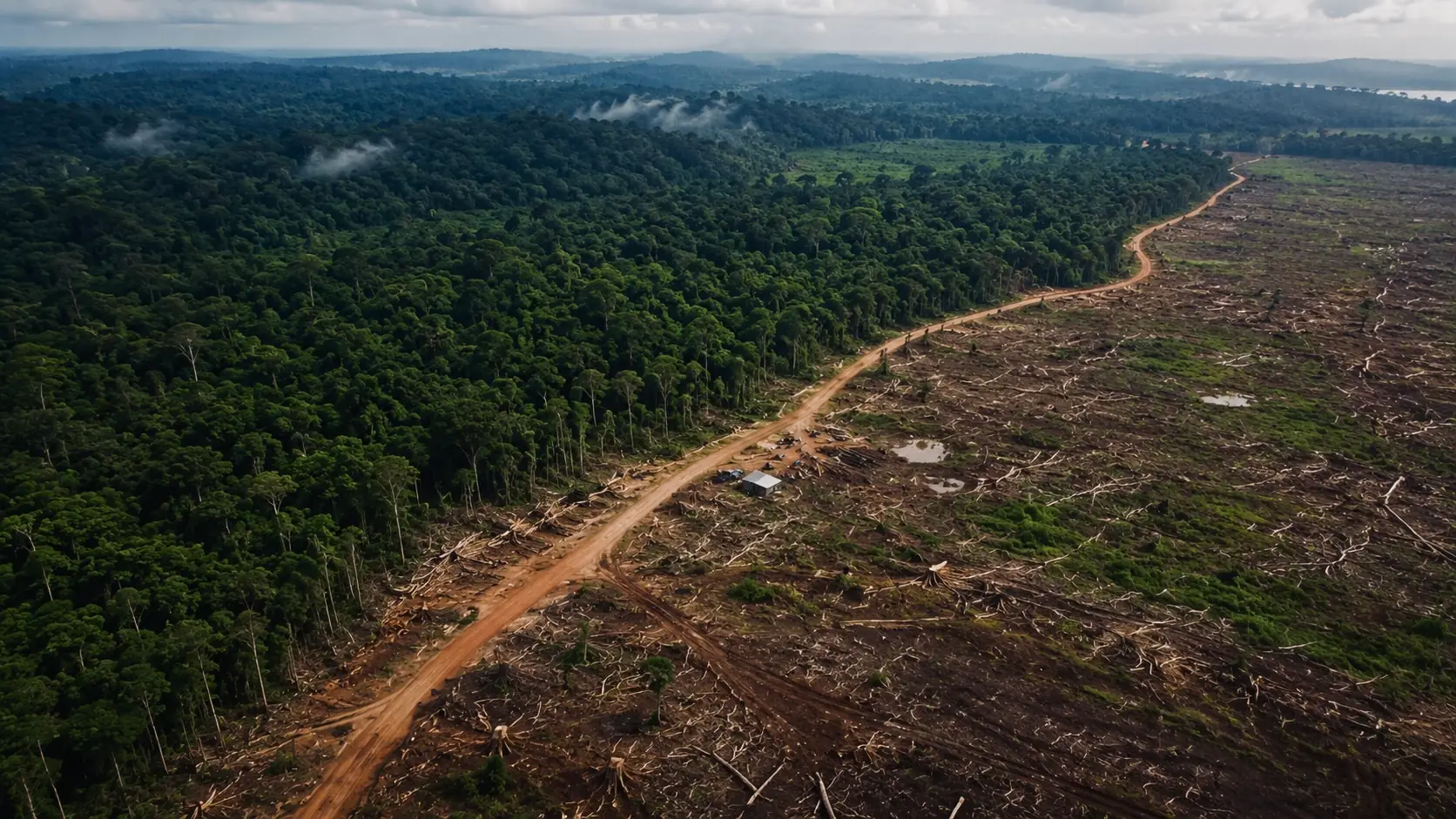
Direct measurement is no longer confined to the methodology families that admitted it first. Forestry conservation in standing primary forest is now measurable continuously by satellite, and TenTrinity Carbon originates programmes under a protocol that does so, by agreement with its developer. That position is set out in full on the measurement page. Other families still rely on proxy approaches that estimate carbon stock and flux from satellite imagery, allometric equations, ground truthing, and ecological modelling. Where TenTrinity Carbon works with such methodologies, it requires conservative buffer assumptions, transparent uncertainty quantification, and a clear scientific basis published or peer-reviewed. The company does not work with methodologies that obscure their assumptions or that adopt aggressive proxy values.
Methodology defensibility is the test.
For each credit TenTrinity Carbon places, the test is whether the underlying methodology is defensible on the merits to a buyer who has read it. Methodologies that satisfy this test are placed. Methodologies that do not are declined. The test is applied at the point of programme origination, not after credits have been issued.
Verify
Every credit TenTrinity Carbon places is verified by an accredited third party, and the company tracks that status for as long as it holds or places the credit.
Accredited third-party verification only.
Every credit TenTrinity Carbon places is verified by an accredited validation and verification body operating under an internationally recognised standard. The company does not place credits that are self-verified by the project developer, and it does not place credits whose verification rests on a body whose accreditation is contested or whose independence is in question.
Verification status is monitored after issuance.
Verification is a current state, not a permanent one. Where a methodology is revised, where a standards body issues a determination affecting a family of projects, or where a verification body is itself the subject of regulatory or industry concern, TenTrinity Carbon reassesses the credits in its portfolio affected by the development. Counterparties are informed of any material change to the verification position of credits they have purchased or contracted for.
Contested verifications are excluded.
Where a verification position is contested at the standards-body level, in formal proceedings, or in credible third-party analysis, TenTrinity Carbon does not place the credits in question, regardless of whether the contest is ultimately resolved in favour of the project. The cost of waiting until the contest resolves is borne by the company and the developer, not by the counterparty.
Insure
Carbon credits carry permanence and delivery risk. Where the instrument allows, TenTrinity Carbon places cover against that risk. Where it does not, the counterparty is told before the trade.
Permanence cover where the instrument permits.
Nature-based credits face permanence risk: the carbon sequestered by a forest, peatland, or mangrove can be released by fire, drought, disease, conversion, or conflict. Where the credit instrument permits, TenTrinity Carbon structures permanence cover with Lloyd's of London and equivalent insurance markets. The cover responds where a permanence event affects credits the counterparty has purchased, providing compensation in credits or in cash according to the cover terms.
Delivery cover where forward contracts apply.
Where credits are sold forward against future issuance, TenTrinity Carbon structures delivery cover that responds in the event of project non-delivery. The cover converts a forward sale from an unhedged delivery obligation into a structured commitment with defined fallback. Counterparties are not asked to bear delivery risk that the company itself has not underwritten.
Where insurance is unavailable, the counterparty is told.
Not every credit can be insured. Some methodology families, some jurisdictions, and some delivery structures fall outside the appetite of the available insurance markets. Where insurance is unavailable for a credit TenTrinity Carbon is placing, the company tells the counterparty why before any commitment is made. The counterparty is given the basis on which to assess the uncovered exposure and decide whether to proceed.
Deliver
TenTrinity Carbon settles against executed documentation under bilateral law, with registry transfer and payment mechanics agreed before a trade is struck.
Tokenised settlement where the programme supports it.
Where the underlying registry and the programme structure support tokenised settlement, TenTrinity Carbon uses it. Tokenisation gives the counterparty a clear, auditable, on-chain record of the credit's transfer alongside the conventional registry record. It does not replace the registry; it reinforces it.
Registry transfer against payment.
All credit transfers settle against payment under bilateral law. TenTrinity Carbon does not deliver credits ahead of payment, and it does not request payment ahead of delivery. Settlement infrastructure is defined in the underlying contract and operates to institutional standards.
Contractual certainty over commercial flexibility.
Where TenTrinity Carbon's standards on origination, measurement, verification, insurance, and delivery conflict with a counterparty's preferred commercial terms, the company holds to its standards. The company declines engagements that would require it to lower its standards in exchange for a particular pricing outcome or transactional convenience. Counterparties who engage with TenTrinity Carbon engage on the basis of the five commitments above.

At scale
The terrain the commitments cover.
In practice
The five commitments operate as one standard.They are the basis on which engagements are accepted or declined.
A project that cannot satisfy the five commitments is one TenTrinity Carbon does not place. A counterparty who engages with the company engages on the basis that every credit placed has been originated, measured, verified, insured, and delivered to those standards. The standards are not negotiable transaction by transaction. They are the company's working definition of what integrity-led carbon markets work means.